ACbit – Chega! Ba Ita Learning from the Past, for A Better Future
Related Articles
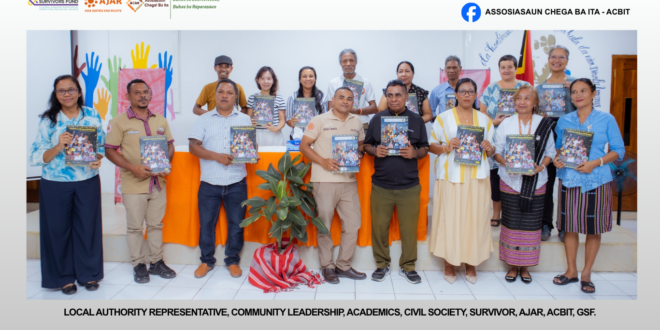
The launch of the book serves as an important advocacy initiative to support the State, as the primary duty-bearer, in fulfilling its responsibility to recognize women survivors and their children and to provide meaningful and comprehensive reparations for the harm and suffering they have experienced as a consequence of war. The launch also provides an important platform for communicating survivors’ concerns, aspirations, and demands to government institutions, local and community leaders, state authorities responsible for justice, churches, communities, civil society organizations, academics, and other relevant stakeholders. Through this process, the initiative seeks to encourage decision-makers to recognize survivors’ experiences and ensure that their rights, perspectives, and needs are taken into consideration when developing and implementing public policies. In addition, sharing these findings is intended to strengthen understanding of the structural, social, institutional, and economic barriers that continue to contribute to the vulnerability and marginalization of survivors and their children and strengthen survivors’ access to justice, recognition, social protection, and reparations.
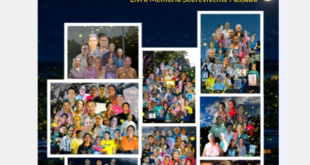
The book, entitled Lalatak no Roman Pirilampu: Book of Memories of Past Survivors, documents the experiences, resistance, resilience, and continuing struggles of women survivors and children affected by the conflict. In particular, it recounts the experiences of serious human rights violations suffered during the Indonesian occupation, including trauma, conflict-related sexual violence, torture, detention, hunger, neglect, displacement, loss of homes, loss of livestock and farmland, and the loss of children, husbands, and other family members. The book also documents the challenges that survivors have continued to experience following independence, these include family rejection, lack of access to or recognition of land rights, social exclusion, isolation, stigmatization, discrimination, and mistreatment within communities. Some survivors have also experienced discrimination within churches and other institutions. At the same time, many survivors feel that the State has not adequately recognized their suffering, contributions, and rights, leaving them feeling forgotten, abandoned, discriminated against, and undervalued.
The book is divided into ten chapters and covers experiences from 13 municipalities, including Women Survivors (WS) and Children Born of War (CBOW), as presented in Table 1.
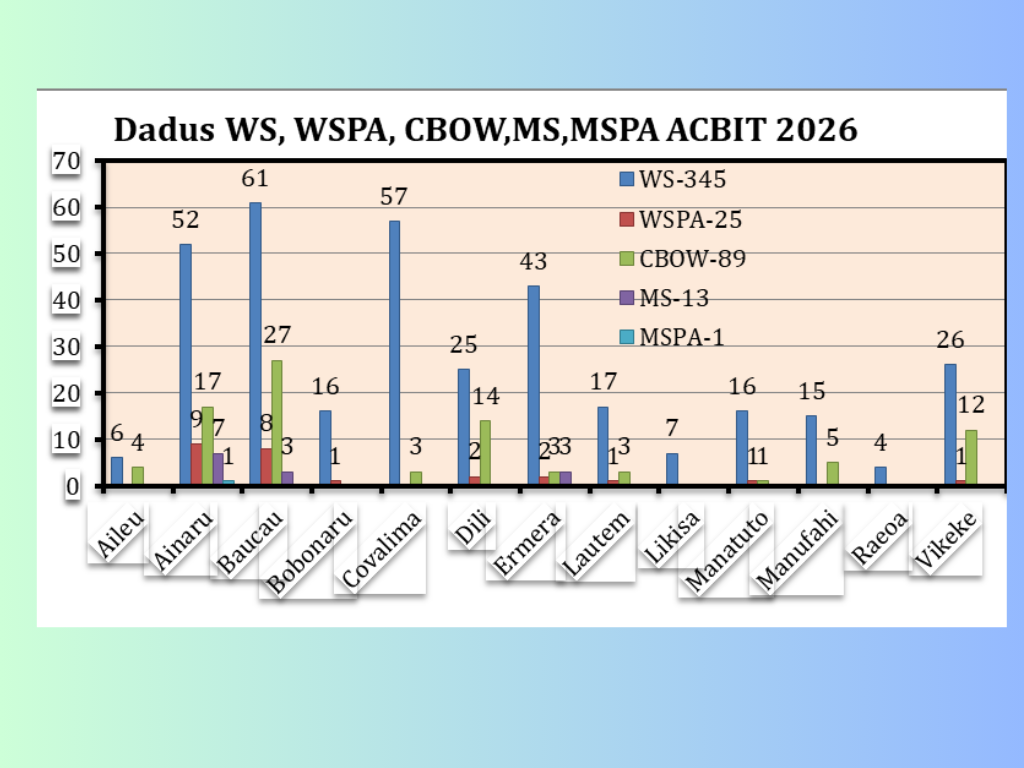 Preserving women survivors’ and their children’s memories of occupation, trauma, resistance, and survival is essential to ensure their experiences are not forgotten or distorted and to include their contributions to Timor-Leste’s independence in the national history. It also supports survivors and grassroots groups, including PIRILAMPU leaders, to build leadership and advocacy skills so they can speak for themselves and help drive survivor-centred justice and change. The publication also aims to advance knowledge and understanding of the history and experiences of survivors of conflict-related sexual violence (CRSV), including the specific challenges faced by women survivors and children born of war. It seeks to strengthen public understanding of survivors’ and victims’ rights to reparations and to reinforce awareness of the State’s obligations to respect, protect, and fulfil these rights.
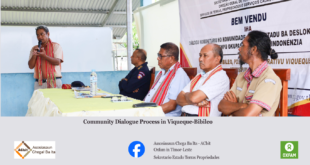
During the book launch process, the initiative received direct appreciation and recognition from several local authorities and other stakeholders. The President of the Ainaro Municipal Authority acknowledged that survivors have not received sufficient attention and continue to face difficult circumstances, particularly in relation to their children who were born as a consequence of the war. The President of CCLN Oecusse recognized the significant role of women in the struggle for independence, emphasizing that the achievement of independence was not the result of men’s efforts alone, but also depended on the courage, sacrifice, and contributions of women. The President of the Manatuto Municipal Authority encouraged survivors not to be afraid when seeking assistance or addressing cases involving documentation, justice, or churches. He expressed a commitment to facilitating direct engagement with the relevant authorities when problems arise, emphasizing that the responsibility of public institutions is to ensure fair and equal treatment for everyone. Meanwhile, the Secretary of Finance Administration of the PAM Covalima delegation emphasized the importance of women’s contributions and highlighted the value of history as a lesson for future generations, she described the book as “like a golden stone,” These statements from local authorities demonstrate that the book launch created an important space for dialogue between survivors and public institutions.
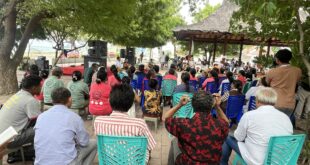
The book launch involved a wide range of activities designed to promote public awareness, community participation, and dialogue. These activities included community socialization sessions, poetry performances, presentations of the book’s content, wall journals, concerts, bazaars, and open-stage activities. The launch activities were conducted across 13 municipalities in Timor-Leste and involved local authorities, community leaders, civil society organizations, the PNTL, government institutions and relevant directorates, including representatives from the Ministry of Health, Ministry of Education and Ministry of Justice, CCLN, survivors, and their children, the book was also distributed directly to key stakeholders who have an important role in ensuring that the voices and demands of survivors are heard and reflected in public policy and institutional responses. A total of 986 people participated in the launch activities, comprising 578 women and 408 men. The level of participation demonstrates the importance of creating public spaces in which survivors’ experiences can be heard, discussed, and acknowledged by communities and institutions.
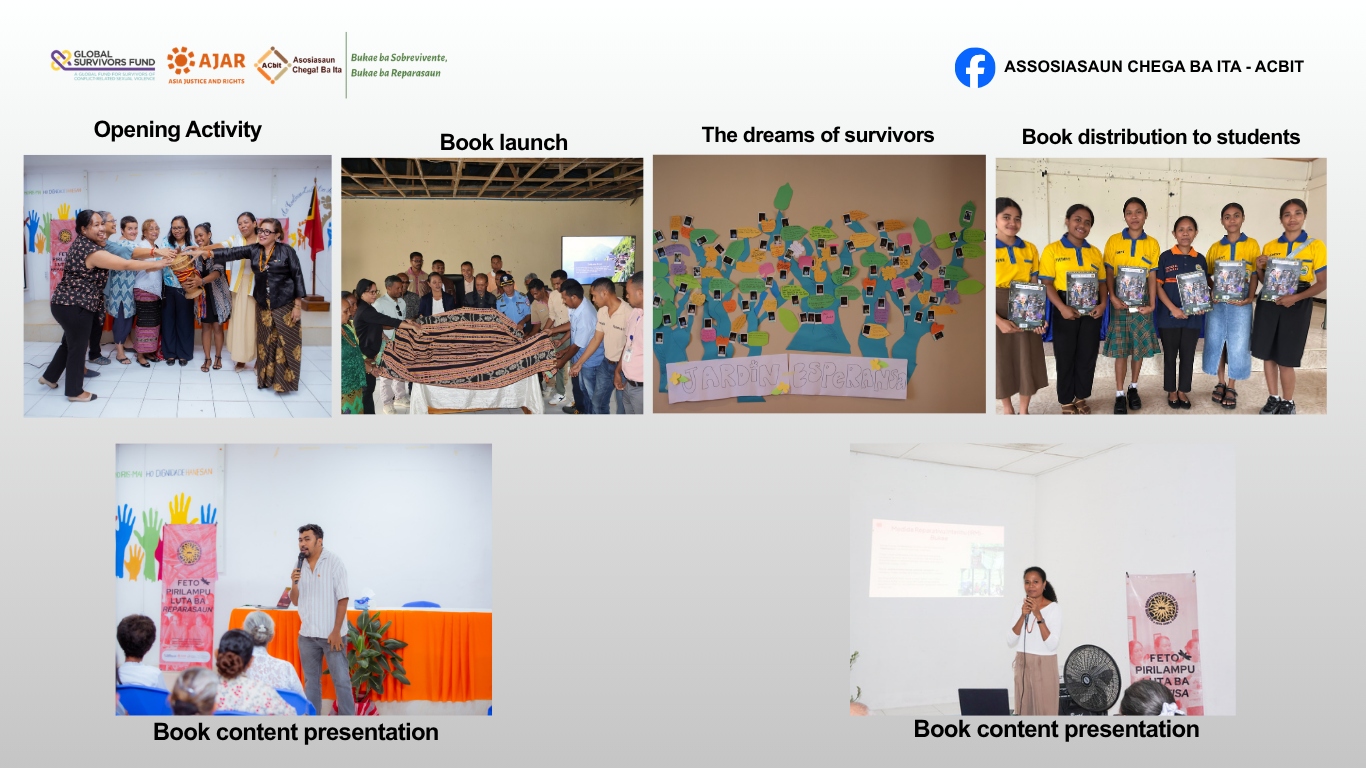
The distribution of the book ensures that survivors’ testimonies and the findings of the research can continue to inform public dialogue, institutional decision-making, academic research, community awareness, and advocacy beyond the launch events. The book represents the final outcome of the Bukae Program, a three-year initiative led by ACbit, AJAR, and the Global Survivor Fund, together with local NGOs. The program sought to strengthen transformative and co-creative approaches to reparations for survivors. Bukae is a term used by Timorese people to describe a bote used to carry food on long journeys. For survivors, the concept of Bukae represents the idea of interim reparations, symbolizing the sharing of life-sustaining resources and support so that survivors can continue their long journey toward truth, justice, healing, and recovery.
The Bukae Program was developed in response to the recommendations of the CAVR concerning the establishment of a national reparations program for victims of past conflicts, including women who experienced sexual violence. However, despite these recommendations, the State has not yet implemented a comprehensive national reparations program. The launch of Lalatak no Roman Pirilampu: Book of Memories of Past Survivors represents far more than the publication of a book. It is an important advocacy initiative that brings together survivors’ memories, research evidence, community participation, public recognition, and the continuing demand for justice and reparations.