ACbit – Chega! Ba Ita Learning from the Past, for A Better Future
Related Articles

ACbit-Website-Bemori-Dili-Timor-Leste-Community dialogue is an important mechanism for conflict resolution, particularly when it incorporates traditional practices and democratic principles. It provides a space for parties involved in land disputes to identify the underlying causes of conflict, express their concerns, and work collectively toward fair and sustainable solutions. Community dialogue also strengthens democratic values by promoting collective decision-making and ensuring that affected individuals and communities have the opportunity to participate meaningfully in decisions that affect their lives and livelihoods.
Land is an essential resource for women and men, supporting farming, livestock, gardening, livelihoods, housing, and family security. However, for women survivors in Caicassa and Bibileo, access to and control over land remain challenging due to patriarchal cultural practices. If not addressed, these challenges can reinforce gender inequality and increase survivors’ vulnerability, affecting not only land access but also tenure security, dignity, community relationships, economic opportunities, and their ability to build sustainable livelihoods and rebuild their lives.
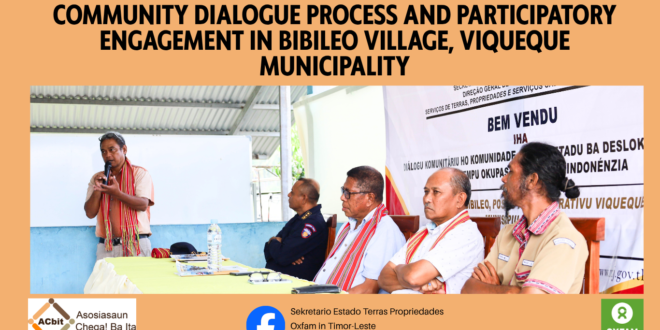
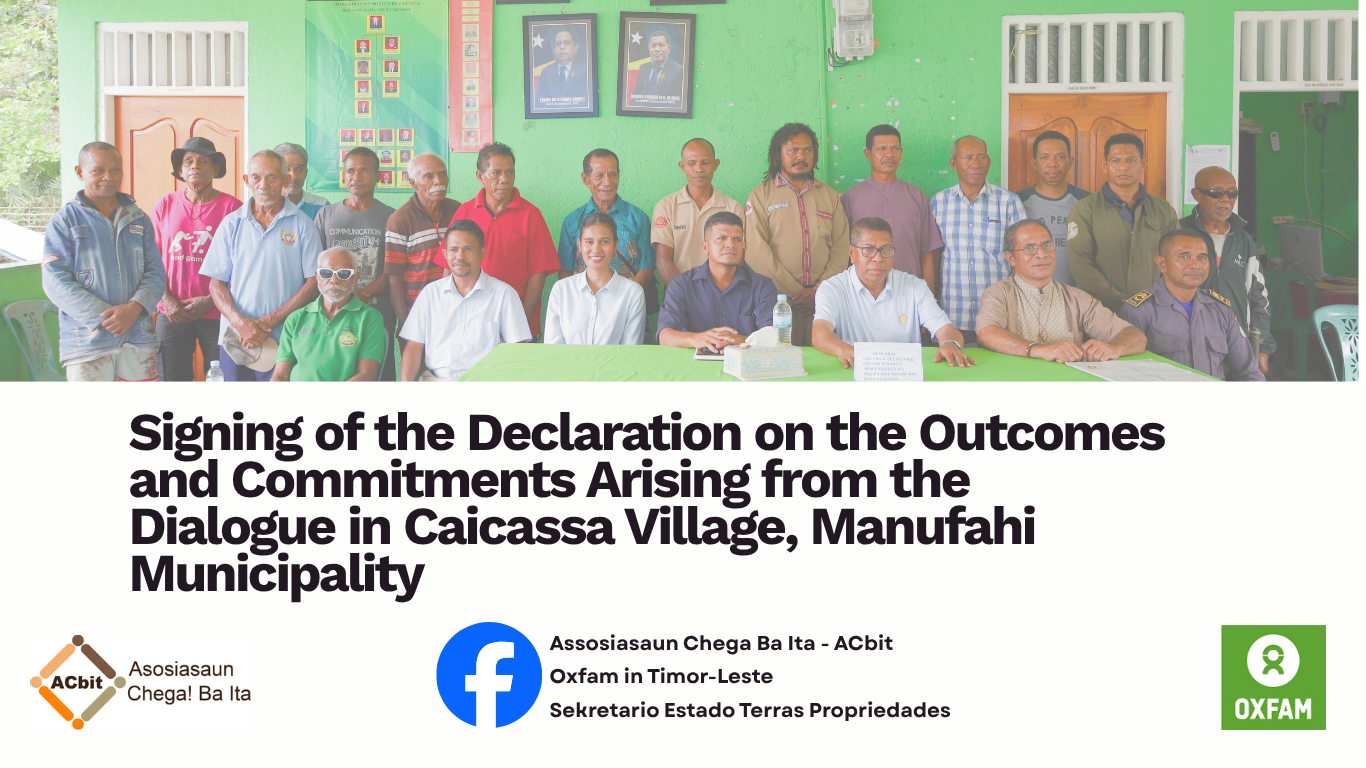
ACbit considers coordination with the Government, particularly the Secretariat of State for Lands and Property (SETP), essential to addressing the challenges faced by women survivors. This engagement enables survivors to present their concerns, complaints, and recommendations directly to government representatives and community leaders. Following consultations, Mr. Jaime Xavier Lopes of SETP demonstrated commitment to understanding community concerns and facilitating dialogue among survivors, affected communities, and indigenous communities. With support from Oxfam Timor-Leste, SETP and ACbit facilitated community dialogues involving the President of the Municipal Authority, Municipal Directorate of Lands and Property, community leaders, local authorities, PNTL, community representatives, women survivors, affected communities, and indigenous communities. Their participation enabled diverse perspectives to be heard and supported fair, inclusive, and community-accepted solutions. The dialogue aimed to provide a safe space for mediation, understanding, negotiation, and conflict resolution while protecting the safety, dignity, and rights of women survivors.
In Caicassa, the community dialogue has made important progress, with communities reaching consensus that respects local customs and cultural practices. Women survivors have gained greater recognition of their rights to participate in land-use and ownership decisions and have greater freedom to use land for farming and livelihoods, strengthening their dignity, security, and economic well-being. In Bibileo, Viqueque Municipality, negotiations remain ongoing, as the community and survivors have not yet reached a mutually acceptable solution. The complexity of the dispute requires time, patience, continued commitment, meaningful participation, and ongoing dialogue to build trust and achieve a fair and sustainable solution.
The dialogue process was supported by Participatory Action Research (PAR), which documented women survivors’ experiences and challenges related to land access and use in Bibileo and Caicassa. Using participatory methods such as Stone and Tree, Timeline, Living Resources, and Community Mapping, survivors and communities shared their experiences of forced displacement and land disputes. The findings show that past conflicts continue to affect survivors’ lives through restrictions on land use, difficulties repairing homes, discrimination, intimidation, and challenges in registering land. These issues affect their livelihoods, dignity, land rights, gender equality, and social inclusion.
The community dialogue between women survivors, affected communities, and indigenous communities is an important step toward resolving longstanding land conflicts and strengthening social cohesion. The experience in Caicassa shows that, with support from government institutions, community leaders, civil society, and communities, dialogue can promote culturally appropriate solutions while protecting survivors’ rights and dignity. However, the situation in Bibileo shows that land disputes linked to historical displacement, customary practices, community relations, and gender inequality remain complex and require continued dialogue and mediation. Moving forward, women survivors must remain at the center of the process, with their voices and recommendations reflected in land-related decisions. Strong coordination among government, communities, indigenous groups, civil society, and survivors is essential to ensure fair land access, sustainable livelihoods, protection from discrimination and intimidation, and lasting peace and reconciliation.